
Scroll Top
PCN Logo
THE PACIFIC CIGUATERA NETWORK
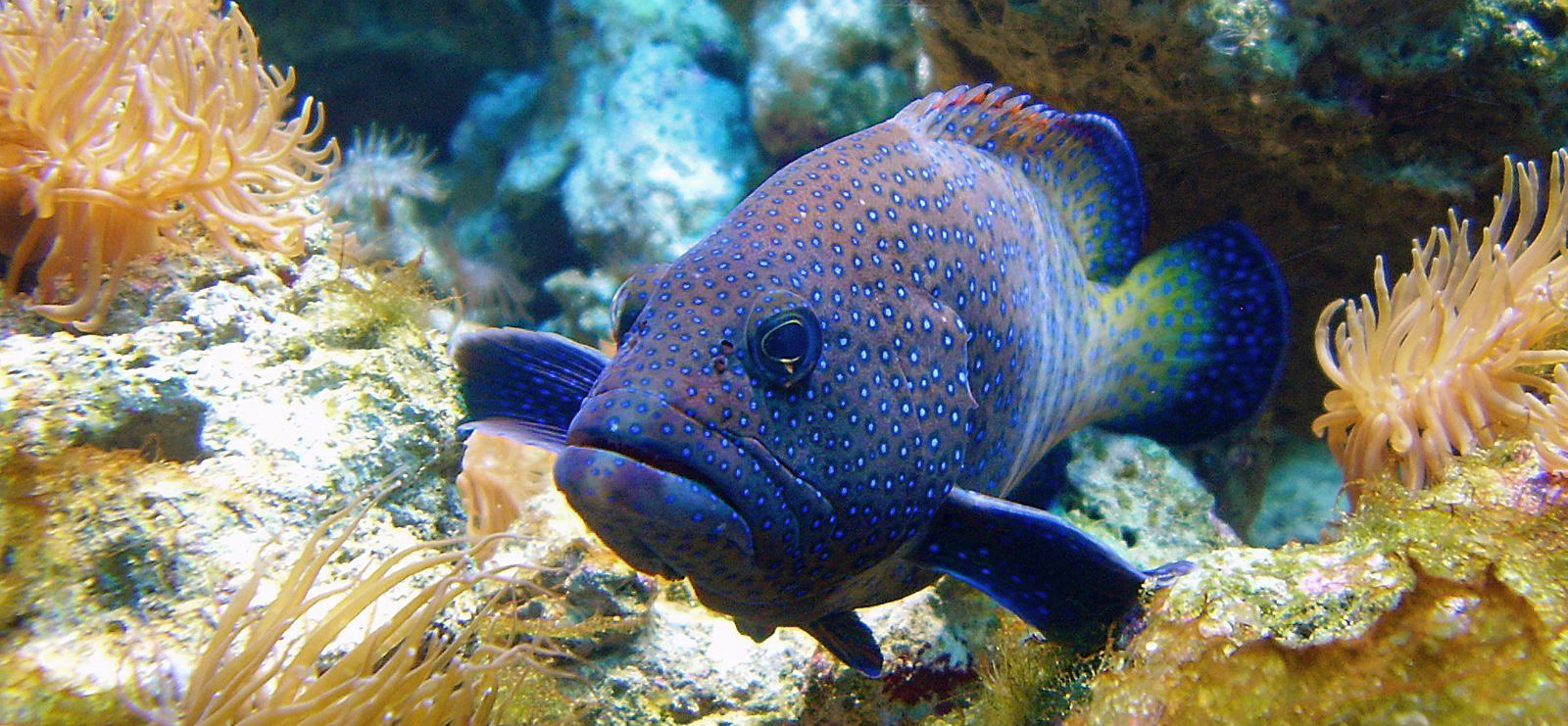
A bright blue cephalophis Argus swims through a reef
RESOURCES
SPECIES SUSPECTED OF CARRYING CIGUATOXINS

Use the following links to read more about the species of fishes and invertebrates that have been identified as carriers of ciguatoxins. While there is some crossover between the suspected species in different locations, these lists have been created as place-specific guides.

FACT SHEETS

*Coming Soon* Localized fact sheets for every region in the network. These fact sheets will include information such as an FAQ that is regionally relevant, in addition to contact information that is relevant to each region.

RESEARCH

*Coming Soon* A comprehensive literature review covering what researchers know about ciguatera, and ciguatera in the Pacific Islands region.

Ansdell, V. (2024). Food poisoning from marine toxins. In CDC Yellow Book 2024. CDC.gov. https://wwwnc.cdc.gov/travel/yellowbook/2024/environmental-hazards-risks/food-poisoning-from-marine-toxins#:~:text=Ciguatera%20poisoning%20can%20cause%20cardiovascular,%2C%20general%20malaise%2C%20and%20insomnia.

Bagnis, R., Chanteau, S., Chungue, E., Hurtel, J.M., Yasumoto, T., & Inoue, A. (1980). Origins of ciguatera fish poisoning: A new dinoflagellate, Gambierdiscus toxicus Adachi and Fukuyo, definitively involved as a causal agent. Toxicon 18 (2), 199–208.

Bagnis, R., Spiegel, T., Nguyen, L., & Pilchart, R. (1992). Public health, epidemiological and socioeconomic patterns of ciguatera in Tahiti. In: Tosteson, T.R. (Ed.), Proceedings of the 3rd International Conference on Ciguatera Fish Poisoning. La Parguera, Puerto Rico. 30 April–5 May 1990. Polyscience Publications, Quebec City, Canada, pp. 155–168.

Banner, A.H. (1976). Ciguatera: a disease from coral reef fish. Biol. Geol. Coral Reef 3, 177–213.

Begier, E. M., Backer, L. C., Weisman, R. S., Hammond, R. M., Fleming, L. E., & Blythe, D. (2006). Outbreak bias in illness reporting and case confirmation in ciguatera fish poisoning surveillance in south Florida. Public Health Reports, 121(6), 658-665. https://doi.org/10.1177/003335490612100605

Bentur, Y. & Spanier, E. (2007). Ciguatoxin-like substances in edible fish on the eastern

Berdalet, E., Tester, P., Chinain, M., Fraga, S., Lemée, R., Litaker, W., Penna, A., Usup, G., Vila, M., & Zingone, A. (2017). Harmful algal blooms in benthic systems: Recent progress and future research. Oceanography, 30(1), 36–45. https://doi.org/10.5670/oceanog.2017.108

Bienfang, P., DeFelice, S., & Dowling, A. (2011). Quantitative evaluation of commercially available test kit for ciguatera in fish. Food Nutr. Sci. 2, 594–598 06.

Bienfang, P., DeFelice, S., Laws, E., Wallsgrove, N. & Caldwell, P., (2012). Ciguatoxicity in the main Hawaiian Islands: spatial and temporal variability in the introduced reef carnivore Cephalopholis argus. Journal of Environmental Science and Technology 1, 1–11.

Bienfang, P., Parsons, M. L., Bidigare, R. R., Laws, E. A., & Moeller, P. D. R. (2008).  Mediterranean. Clin. Toxicol. 45 (6), 695–700.

Centers for Disease Control and Prevention (CDC). (2023). Food Poisoning from marine toxins. CDC Yellow Book 2024. https://wwwnc.cdc.gov/travel/yellowbook/2024/environmental-hazards-risks/food-poisoning-from-marine-toxins

Copeland, N. K., Palmer, W. R., & Bienfang, P. K. (2014). Ciguatera fish poisoning in Hawai’i and the Pacific. Hawaii Journal of Medicine & Public Health, 73, 24–27. 

Chan, T. Y. K. (2016). Characteristic features and contributory factors in fatal ciguatera fish poisoning—Implications for prevention and public education. American Journal of Tropical Medicine and Hygiene, 94(3), 704–709. 

Chinain, M., Darius, H. T., Ung, A., Cruchet, P., and Wang, Z. (2010). Growth and toxin production in the ciguatera-causing dinoflagellate Gambierdiscus polynesiensis (Dinophyceae) in culture. Toxicon, 56, 739–750. 

Chinain, M., Gatti, C. M. I., Darius, H. T., Quod, J. P., & Tester, P. A. (2021). Ciguatera poisonings: A global review of occurrences and trends [Review]. Harmful Algae, 102, 22, Article 101873. https://doiorg.eres.library.manoa.hawaii.edu/10.1016/j.hal.2020.101873

Ciguatera Fish Poisoning: A synopsis from ecology to toxicity. In A. D. M. E. Nriagu (Ed.), Oceans and Human Health: Risks and Remedies from the Sea (pp. 257–270). Elsevier.

Clemens, J.A.G. (1997). Investigation of ciguatera in American Samoa. American Samoa Department of Wildlife. 22 pp.

Cruz-Rivera, E., & Villareal, T. A. (2006). Macroalgal palatability and the flux of ciguatera toxins through marine food webs. Harmful Algae, 5, 497–525.

Dalzell P. (1992). Ciguatera fish poisoning and fisheries development in the South Pacific Region. Bulletin de la Societe de pathologie exotique (1990), 85(5 Pt 2), 435–444.

Dickey, R. W., & Plakas, S. M. (2010). Ciguatera: A public health perspective. Toxicon, 56(2), 123–136. https://doi.org/10.1016/j.toxicon.2009.09.008

Gatti, C. M. I., Chung, K., Oehler, E., Pierce, T. J., Gribble, M. O., & Chinain, M. (2021). Screening for predictors of chronic ciguatera poisoning: an exploratory analysis among hospitalized cases from French Polynesia. Toxins, 13(9), 646. https://www.mdpi.com/2072-6651/13/9/646

Glaziou, P., & Legrand, A. M. (1994). The epidemiology of ciguatera fish poisoning. Toxicon: official journal of the International Society on Toxinology, 32(8), 863–873. https://doi.org/10.1016/0041-0101(94)90365-4

Gollop, J. H., & Pon, E. W. (1992). Ciguatera: a review. Hawaii Medical Journal, 51(4), 91–99. 

Ichinotsubo, D., Shimizu, M., Kam, E. A., & Okano, E. A. (1994). Survey for ciguatera fish poisoning in West Hawaii. Memoirs of the California Academy of Sciences, 34, 513–522.

Katz, A. R., Terrell-Perica, S., & Sasaki, D. M. (1993). Ciguatera on Kauai: Investigation of factors associated with severity of illness. American Journal of Tropical Medicine and Hygiene, 49, 448–454.

Kuberski, R. B. & Laugier, S. (1979). Clinical observations on 3,009 cases of ciguatera (fish poisoning) in the South Pacific. The American Journal of Tropical Medicine and Hygiene., 28(6), 1067-1073.

Lehane, L., Lewis, R.J. (2000). Ciguatera: Recent advances but the risk remains. International Journal of Food Microbiology. 61 (2–3), 91–125.https://doi.org/10.1016/S0168-1605(00)00382-2.

Lewis N. D. (1986). Disease and development: ciguatera fish poisoning. Social science & medicine (1982), 23(10), 983–993. https://doi.org/10.1016/0277-9536(86)90255-8

Lewis, R. J. (1992). Socioeconomic impacts and management of ciguatera in the Pacific. Bulletin de la Société de Pathologie Exotique, 85(6), 427–434.

Litaker, R., Vandersea, M., Faust, M., Kibler, S., Nau, A., Holland, W., Chinain, M., Holmes, M., & Tester, P. (2010). Global distribution of ciguatera causing dinoflagellates in the genus Gambierdiscus. Toxicon: Official journal of the International Society on Toxinology. 56. 711-30. https://doi.org/10.1016/j.toxicon.2010.05.017

Llewellyn, L. (2010). Revisiting the association between sea surface temperature and the epidemiology of fish poisoning in the south Pacific: Reassessing the link between ciguatera and climate change. Toxicon, 56, 691–697.

Loeffler, C. R., Tartaglione, L., Friedemann, M., Spielmeyer, A., Kappenstein, O., & Bodi, D. (2021). Ciguatera Mini Review: 21st Century Environmental Challenges and the Interdisciplinary Research Efforts Rising to Meet Them. International Journal of Environmental Research and Public Health, 18(6), 3027. https://doi.org/10.3390/ijerph18063027

McKee, D. B., Fleming, L. E., Tamer, R., Weisman, R., & Blythe, D. (2001). Physician diagnosis and reporting of ciguatera fish poisoning in an endemic area. Harmful Algal Blooms 2000., 451-453. 

Nalley, E. M. (2024). Highlighting the impacts of ciguatera poisoning on fishers and fish consumers in Hawaiʻi to inform future management strategies. Marine Policy, 159, 105875. https://doi.org/10.1016/j.marpol.2023.105875

Office of National Marine Sanctuaries (ONMS). (2022). National Marine Sanctuary of American Samoa Condition Report: 2007–2020. U.S. Department of Commerce, National Oceanic and Atmospheric Administration. 318 pp. https://nmssanctuaries.blob.core.windows.net/sanctuaries-prod/media/docs/2022-nmsas-condition-report.

Pacific Ciguatera Network. (n.d.). Who are we? Hawaii Sea Grant. https://seagrant.soest.hawaii.edu/pacific-ciguatera-network/#:~:text=WHO%20ARE%20WE%3F,research%2C%20monitoring%2C%20and%20management.

Parsons, M. L., Settlemier, C. J., & Bienfang, P. K. (2010). A simple model capable of simulating the population dynamics of Gambierdiscus, the benthic dinoflagellate responsible for ciguatera fish poisoning. Harmful Algae, 10, 71–80.

Résière, D., Florentin, J., Mehdaoui, H., Mahi, Z., Gueye, P., Hommel, D., Pujo, J., NKontcho, F., Portecop, P., Nevière, R., Kallel, H., & Mégarbane, B. (2022). Clinical Characteristics of Ciguatera Poisoning in Martinique, French West Indies—A Case Series. Toxins, 14(8), 535–535. https://doi.org/10.3390/toxins14080535

Rongo, T. & van Woesik, R. (2011). Ciguatera poisoning in Rarotonga, southern Cook Islands. Harmful Algae 2011, 10, 345–355. https://www.sciencedirect.com/science/article/abs/pii/S1568988310001253?via%3Dihub

Ruff, T. A. (1989). Ciguatera in the Pacific: A link with military activities. The Lancet, 8631, 201–205.

Shah, M. M. R., Lee, J., & Ahn, S. (2013). Presence of benthic dinoflagellates around coastal waters of Jeju Island including newly recorded species. Journal of Ecology and Environment, 36(4), 347–370. https://doi.org/10.5141/ecoenv.2013.347

Skelton, P. A. (2003). Seaweeds of American Samoa. International Ocean Institute (Australia) & Oceania Research and Development Associates. Report prepared for the Department of Marine & Wildlife Resources, Government of American Samoa. https://www.sprep.org/attachments/VirLib/Regional/skelton-2003-seaweeds-as.pdf

Skinner, M. P., Brewer, T. D., Johnstone, R., Fleming, L. E., & Lewis, R. J. (2011). Ciguatera fish poisoning in the Pacific Islands (1998 to 2008). PLoS neglected tropical diseases, 5(12), e1416. https://doi.org/10.1371/journal.pntd.0001416

Soliño, L., & Costa, P. R. (2020). Global impact of ciguatoxins and ciguatera fish poisoning on fish, fisheries and consumers. Environmental research, 182, 109111. https://doi.org/10.1016/j.envres.2020.109111

StatPearls Publishing. https://www.ncbi.nlm.nih.gov/books/NBK482511/#:~:text=Diarrhea%20is%20the%20most%20commonly,%2C%20gastric%20upset%2C%20and%20belching.

Stinn, J. F., de Sylva, D. P., Fleming, L. E., & Hack, E. (2000). Geographic information systems and ciguatera fish poisonings in the tropical western Atlantic region. In R. C. Williams, M. M. Howie, C. V. Lee, & W. D. Henriques (Eds.), Proceedings of the 1998 Geographic Information Systems in Public Health, Third National Conference (pp. 223–233). San Diego, CA.

Suddleson, M. (2017, April 6). Renewed Interest to Study Ciguatera Risks in Papahānaumokuākea Marine National Monument. Coastalscience.Noaa.Gov. https://coastalscience.noaa.gov/news/renewed-interest-study-ciguatera-risks-papahanaumokuakea-marine-national-monument/

Sullivan, M., Zimba, P., Allen, E., Kinder, C., & Mallin, M. (2007). Phytoplankton and bacterial assemblages in ballast water of U.S. military ships as a function of port of origin, voyage time, and ocean exchange practices. Harmful Algae, 6, 486–518. https://doi.org/10.1016/j.hal.2006.11.006

Tebano, T., & MacCarthy, D. (1991). Ciguatera fish poisoning and the presumed causative organism in the Gilbert Islands, Kiribati. Marine Studies Programme technical report (Samoa), (19919). 

Tester, P., Feldman, R., Nau, A., Kibler, S., & Litaker, W. (2010). Ciguatera fish poisoning and sea surface temperatures in the Caribbean Sea and the West Indies. Toxicon (Oxford), 56(5), 698–710. https://doi.org/10.1016/j.toxicon.2010.02.026

Traylor, J., Murray, B. P., & Singhal, M. (2024). Ciguatera Toxicity. Nih.gov

Vaughan, M. B., & Vitousek, P. M. (2013). Mahele: Sustaining communities through small-scale inshore fishery catch and sharing networks. Pacific Science, 67, 329–344.

World Health Organization (WHO). (2022). Ciguatera poisoning. https://www.who.int/publications/i/item/WHO-HEP-NFS-SSA-2022.1#:~:text=Ciguatera%20poisoning%20affects%20people%20after,risk%20of%20eating%20contaminated%20fish.

SECTIONS
CONTACT

Eileen Nalley
Fisheries Extension Faculty
University of Hawai’i
Sea Grant College Program
Honolulu, HI 96822
enalley@hawaii.edu
Phone: (808) 956-7031