

CENTER FOR COASTAL AND CLIMATE SCIENCE AND RESILIENCE
MAUI DUNE PROGRAM
Welcome to the Maui Dune Program. The Maui Dune Program works to ensure the ongoing integrity of the coastal dune system and foster community collaboration. Please expand the menu below for details including volunteer opportunities and email lists for each case study area.
Restoring coastal dunes to protect our shorelines & community resilience

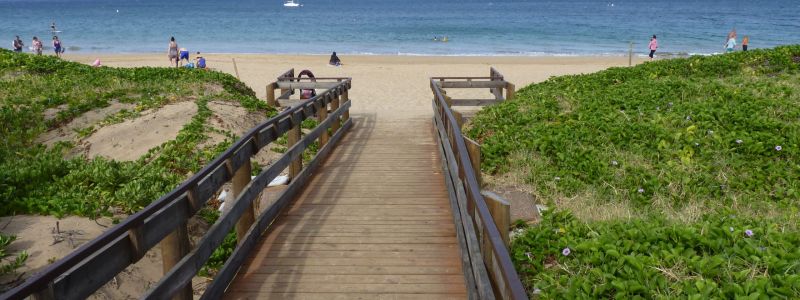
Kapukaulua (Baldwin Beach) has some of the highest erosion rates on Maui due to an extractive history of sand mining, invasive plants, changing coastal conditions, and lack of targeted management. Past uses and current conditions have impacted natural sand movement, which is critical for dune growth.
Healthy dunes are living coastal barriers that help reduce erosion, protect communities from high waves and storms, and provide essential habitat for native coastal plants and wildlife. As sea level rise accelerates, restoring dune systems is one of the most effective and proactive nature-based strategies to build shoreline resilience in Hawaiʻi.
This project aims to develop and implement site-specific plans for dune restoration projects that support both habitat restoration and community resilience.
For over a decade, community members, cultural practitioners, scientists, and local partners have been working together to observe, plan, and implement dune restoration efforts.
Recently, the University of Hawaiʻi Sea Grant Program (Hawai‘i Sea Grant) was awarded a grant from the National Fish and Wildlife Foundation’s National Coastal Resilience Fund to develop site-specific plans for dune restoration at Kapukaulua (Baldwin Beach) from Lower Pāʻia Park to Wawau Point (“Baby Beach”). In the face of sea level rise, the long-term goal of the project is to implement dune restoration activities that have the co-benefits of ecosystem restoration and community resilience.
To plan for and implement this project, Hawai‘i Sea Grant in partnership with the County of Maui Parks Department, has delineated seven restoration zones and developed restoration strategies and actions for each zone.
Today, the project team is working together to:
- Remove invasive vegetation
- Replant native coastal species
- Restore a continuous dune system
- Maintain public access while protecting sensitive habitat
- Establish future buffers to erosion and high waves
- Coordinate resilience actions for future park planning
This project is guided by community input and continuing coastal monitoring. You can learn more about ongoing efforts on the project page here.
Community Engagement is Ongoing!

Healthy dunes support resilient communities, and engaged communities sustain resource management efforts!
Please save the dates for upcoming 2026 engagement opportunities:
– April 20, 2026: Earth Day Community Event
– June 5, 2026: World Environment Day Event
– October 24, 2026: Two-year planting celebration + stewardship showcase
If you were unable to attend recent “Talk Story” meetings, you can view a recording of the presentation session to hear about implementation updates as of March 2026 here.
To receive updates, please sign up for the project email listserv here.
- Sign up for updates (listserv link) here.
- View full StoryMap: https://bit.ly/KapukauluaDunes
Partners

Contact information
For questions, please contact:
Tara Owens, Hawaiʻi Sea Grant: taram@hawaii.edu
Wesley Crile, Hawaiʻi Sea Grant: wcrile@hawaii.edu
Erin Derrington, Project Lead: kapukauluadunes@gmail.com
Contact information:
Wesley Crile
Coastal Dune Restoration Specialist
wcrile@hawaii.edu