

Development of gonadal maturation and spawning strategies in Hawaiian sea cucumbers
PRINCIPAL INVESTIGATOR: Andre Seale
Sea Grant Graduate Fellow: Tyler Goodearly
Research Track: Aquaculture
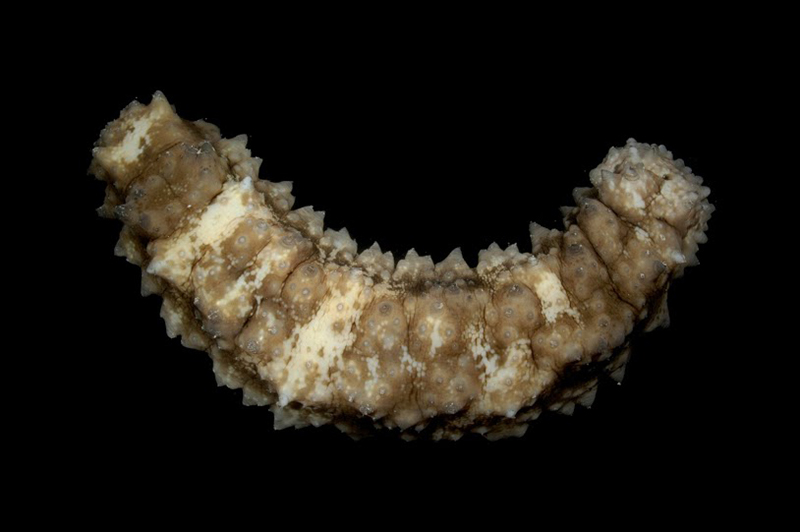
Sea cucumbers comprise a group of echinoderms that have become increasingly important economically, with the rise in aquaculture efforts and the restoration of traditional Hawaiian fishponds. Through feeding on sediment, sea cucumbers play a vital role in reducing organic loads and enhancing biodiversity, making them a unique model for stimulating local economies and restoring fishponds. Aquaculture can relieve pressures on wild stocks and supplement market demands, and in particular, the endemic Hawaiian sea cucumber Stichopus horrens has been identified as an ideal candidate for aquaculture given its fast procreative life cycle and its popularity in Japanese cuisine. However, the lack of reliable breeding techniques present a bottleneck that has hindered its propagation in Hawai‘i. Several hormones have been identified and shown to induce spawning behavior in sea cucumbers, but these have not been tested in sea cucumbers endemic to Hawaiʻi.
This research will partner with local producers, fishpond managers, and research collaborators to address sea cucumber propagation by developing and testing hormones specific to S. horrens in controlling its spawning. To improve sea cucumber output, the research team will characterize and synthesize endogenous procreative hormones in S. horrens, testing the effects on inducing oocyte maturation and spawning behavior, as well as assessing the viability of larvae produced via hormonally-induced spawning events. Knowledge gained from these efforts will provide the framework to overcome procreative dysfunction of S. horrens and reliably produce sea cucumbers in Hawai‘i, thus spearheading national sea cucumber propagation efforts and enacting practices that will optimize growth in sustainable aquaculture systems, including Hawaiian fishponds.